Pomegranate Tart with Hibiscus, Lemon, and Almond Flour Crust {gluten-free} | The Bojon Gourmet
Pomegranate Tart with Hibiscus, Lemon, and Almond Flour Crust {gluten-free}
40 mins prepServes 8
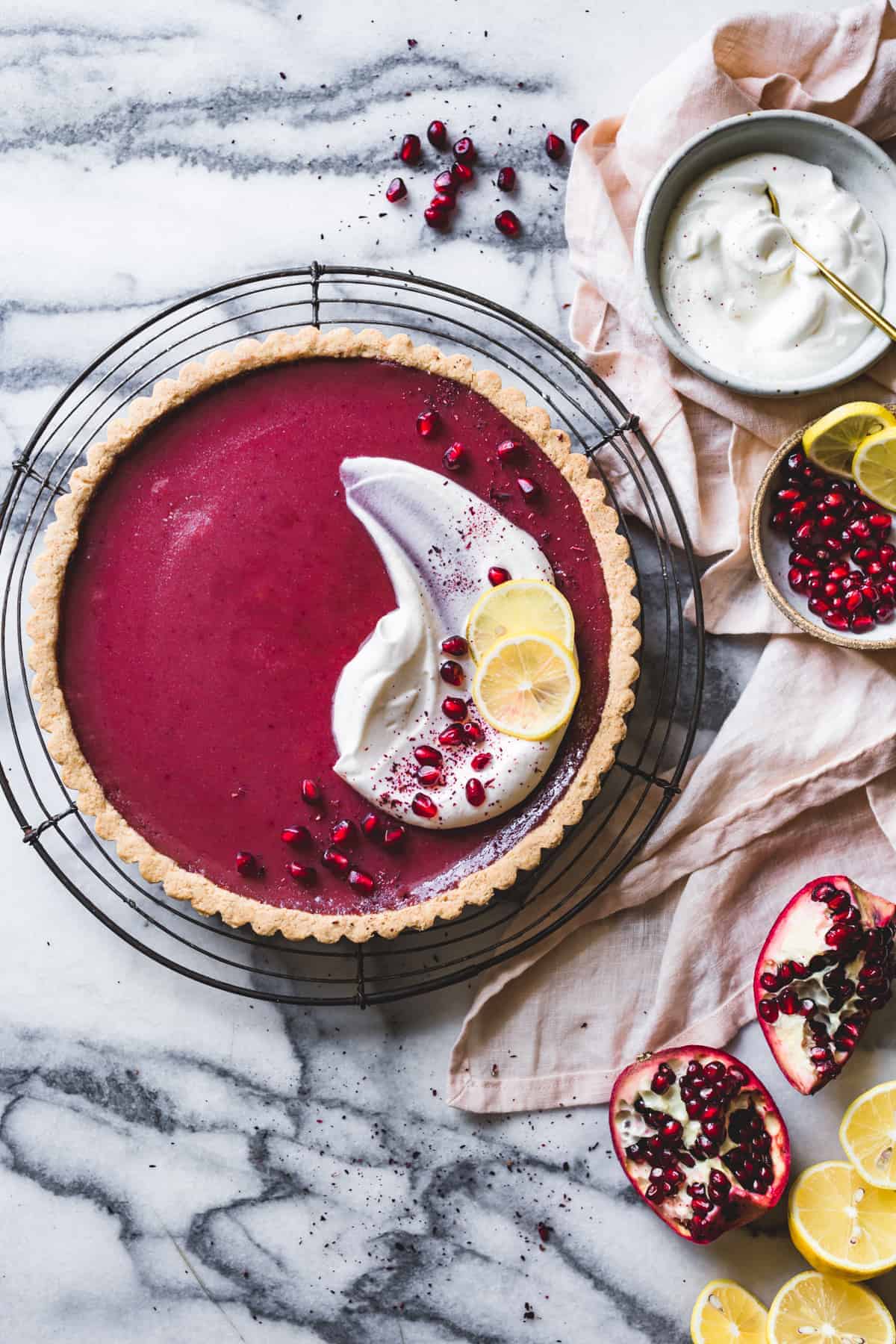
Creamy pomegranate curd kissed with hibiscus and lemon and blanketed in whipped cream and fresh pomegranate arils, all wrapped up in a buttery almond flour crust = gluten-free pomegranate tart bliss.
Make the crust:
2 Position a rack in the center of the oven and preheat to 350ºF.
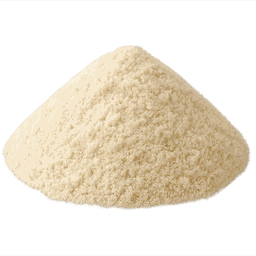
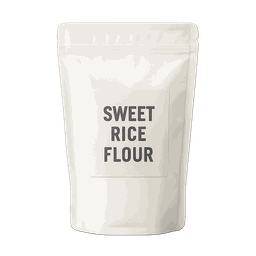
3 In the bowl of a stand mixer fitted with the paddle attachment, combine the almond, sweet rice, and oat flours with the tapioca starch, sugar and salt. Scatter the butter pieces over the top and drizzle with the vanilla extract. Turn the mixer to medium-low and run until the dough comes together in moist clumps and the butter is worked through, 3–5 minutes.
4 Dump about half of the crumbs into a 9-inch loose bottom tart pan and press the dough evenly into the sides of the pan. Add the remaining crumbs and press them into the bottom, keeping the edges square. (It usually takes me about 10 minutes to make it look pretty.) Freeze until firm, 15–30 minutes.
5 Place the tart pan on a rimmed baking sheet and bake until golden all over, 20-30 minutes. Remove the crust from the oven and, while it’s still hot, press the sides and bottom firmly with the back of a spoon; this will help it hold together when cool. Keep warm.
Meanwhile, make the filling:
8 Lower the oven temperature to 325ºF.
9 Place the butter in a heatproof bowl or large measuring cup, place a fine-mesh strainer over the top, and set aside. If using hibiscus blossoms or tea, place in a coffee grinder with about a third of the sugar and grind to a fine powder. (You can skip this step if using hibiscus powder.)
10 In a medium, heavy-bottomed saucepan, whisk together the hibiscus, sugar, lemon zest, eggs and egg yolks to combine. Whisk in the pomegranate and lemon juices. Place the pot over medium-low heat and cook, stirring constantly with a heatproof silicone spatula, until the mixture thickens enough to coat the back of a wooden spoon and reaches 170ºF on an instant-read thermometer, 5–10 minutes. As you stir, be sure to scrape the entire bottom and corners of the pan, so that the mixture heats as evenly as possible. It will start out thick and cloudy from the undissolved sugar, then will turn thin and translucent, and finally begin to thicken and turn cloudy again as the eggs cook. If the mixture starts to curdle or bubble, immediately remove from the heat and proceed to the next step.
11 Immediately pour the curd through the strainer and into the bowl of butter to stop the cooking. Whisk gently to incorporate the butter. Pour the cooked curd over the warm, baked crust. Bake the tart at 325ºF until the sides are barely puffed and the center wobbles like firm Jell-O when you give it a gentle shake, 20–30 minutes. It should not be wet or watery looking (underbaked), nor should it be puffed in the center or cracking (overbaked), but a few small bubbles popping around the sides are perfect. Remove the tart from the oven and let cool for about 30 minutes, then chill until firm, 2–3 hours or overnight.
12 Remove the tart pan sides by placing the tart atop a large can or small, inverted bowl and gently easing the sides from the tart. Chill the tart until firm, at least 2 hours and up to 1 day. Cut into wedges and serve, topping each slice with a spoonful of whipped cream, a good sprinkle of pomegranate arils, and a lemon slice and pinch of hibiscus powder if desired. The tart is best within the first 2 days of baking when the crust is firm, but keeps well, refrigerated airtight, for up to 3 days.