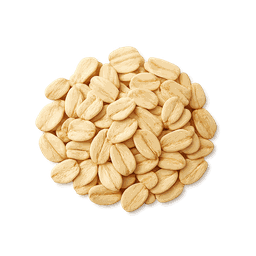
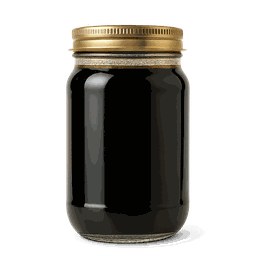
1 Place the oats, molasses and butter in a large, heatproof bowl. Pour the boiling water over and let the mixture cool to warm (100-110ºF; you should be able to comfortably hold a finger in it for at least 10 seconds), stirring occasionally to melt the butter and combine the molasses.
2 Sprinkle the yeast over the mixture, and stir for about 30 seconds to incorporate it (mine never seems to dissolve here). Let the mixture sit for 5-10 minutes. (Mine never bubbles; I think the butter might prevent it from doing so, but it always comes out fine. Just make sure your yeast is fresh.)
3 Stir the whole wheat flour and salt into the yeast/oat mixture. Add 1 cup of the white flour, 1/4 cup at a time, stirring to incorporate after each addition. Continue adding more flour until a shaggy dough forms.
4 Scrape the dough out onto a well-floured surface (a plastic scraper works wonders here). (Optionally, cover the dough with the bowl and let it rest for 15-20 minutes. This is called autolyse, and allows the starches to absorb some of the moisture in the dough, and the glutens to begin unfurling, letting you knead the dough less and add less flour. If you are anxious for fresh-baked oatmeal molasses bread and every second counts, you can skip this step.)
5 In either case, knead the dough vigorously for 10 minutes by pressing it away from you with the heels of your hands, then folding the far edge over the dough (towards you), turning the dough 1/4, and repeating for 10 minutes. As you knead, dust the surface and your hands with just enough flour to keep the dough from sticking.The finished dough should have a slight sheen and be fairly smooth. It will be slightly tacky to the touch.
6 Now, add in the sunflower seeds: pat the dough out into a flat slab about 1 inch thick. Spread 1/3 of the sunflower seeds over the dough, and fold the dough in half, encasing the seeds in the center. Pat the dough out again into a slab, and spread another 1/3 of the seeds on top. Repeat this one more time, using the rest of the seeds. Gather up the dough, and knead it for 30 seconds or so to distribute the seeds evenly throughout the dough.
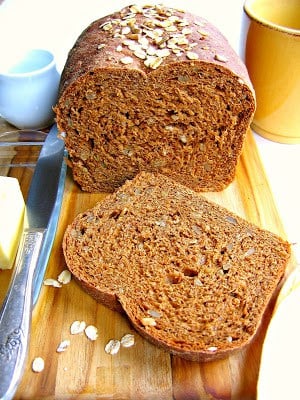
7 Place the dough in a lightly oiled bowl at least twice the size of the dough (or in a large, plastic container), turn the dough to coat it lightly in oil and cover the bowl with plastic wrap (or the lid). Allow the dough to rise in a warm place until doubled in bulk, 1 1/2 to 2 hours. (Try not to overproof the dough - see headnote.) At this point, you can let the dough rise again if you wish, or stick it in the fridge for up to 24 hours; if you do, let it come up to room temperature before working with it.
8 When the dough has finished its first rise, gently scrape it out of the bowl and onto a lightly floured surface. Press the dough into an oval about 1 inch thick, with a skinny end facing you. Roll up the dough from this end and into a tight cylinder. Pinch the seam closed, tuck the ends under, and roll the seam-side of the loaf on the counter a few times to secure it closed.
9 Place the loaf seam-side down in a lightly-oiled 9x5" loaf pan. Place the pan in a large, clean, plastic bag, inflate it with air, and clip or twist tie it closed so that the loaf has room to rise. Let the loaf rise until the tallest part sits 1 1/2 inches above the rim of the pan (it should be roughly doubled in bulk). Mist the loaf lightly with water and sprinkle with a handful of oats.
10 Meanwhile, position a rack in the center of the oven and preheat to 350º.
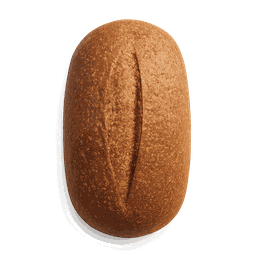
11 Bake the loaf until the top is deeply browned and the loaf sounds hollow when thumped, 45-55 minutes, rotating the loaf halfway through baking. An instant-read thermometer inserted into the center should read 210º.
12 Let the loaf cool 10 minutes, then remove it from the pan and let it cool completely on a rack at room temperature, 1 - 2 hours. The bread is still baking from residual heat, so do try to resist the urge to cut into it before it has cooled completely.
13 Store in a plastic bag at room temperature. The bread keeps well for up to 4 or 5 days.